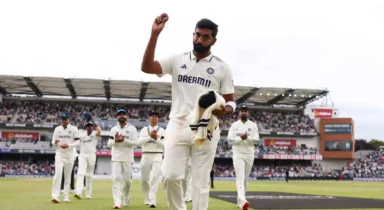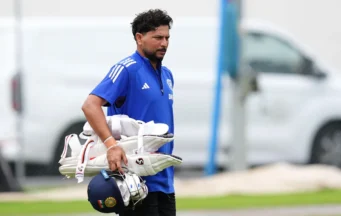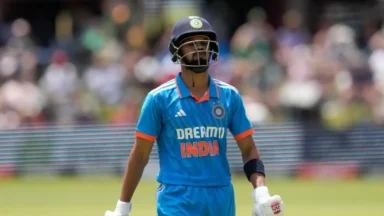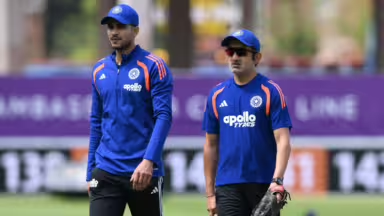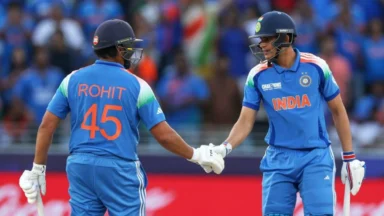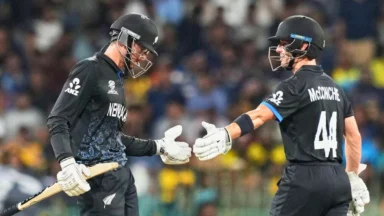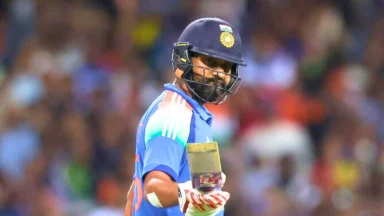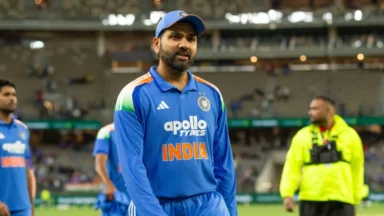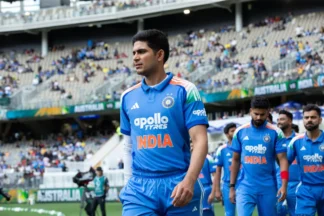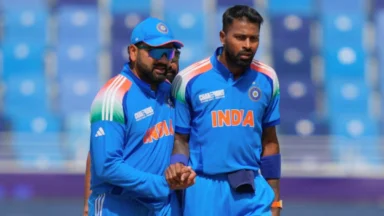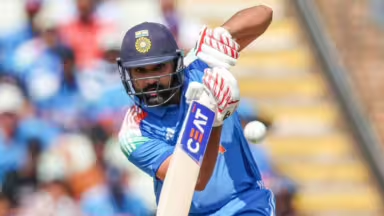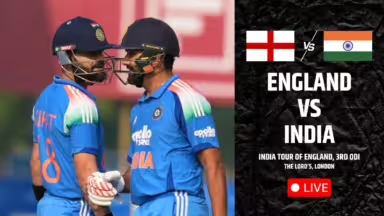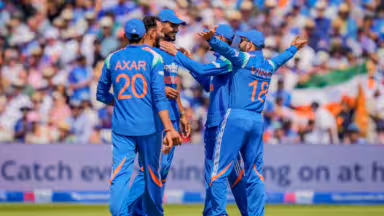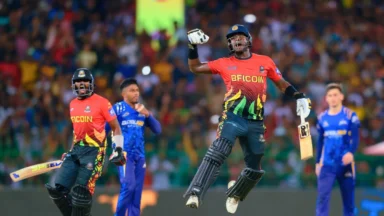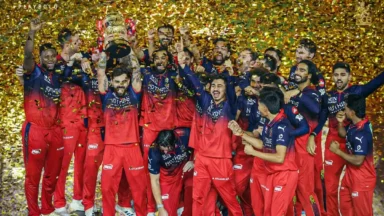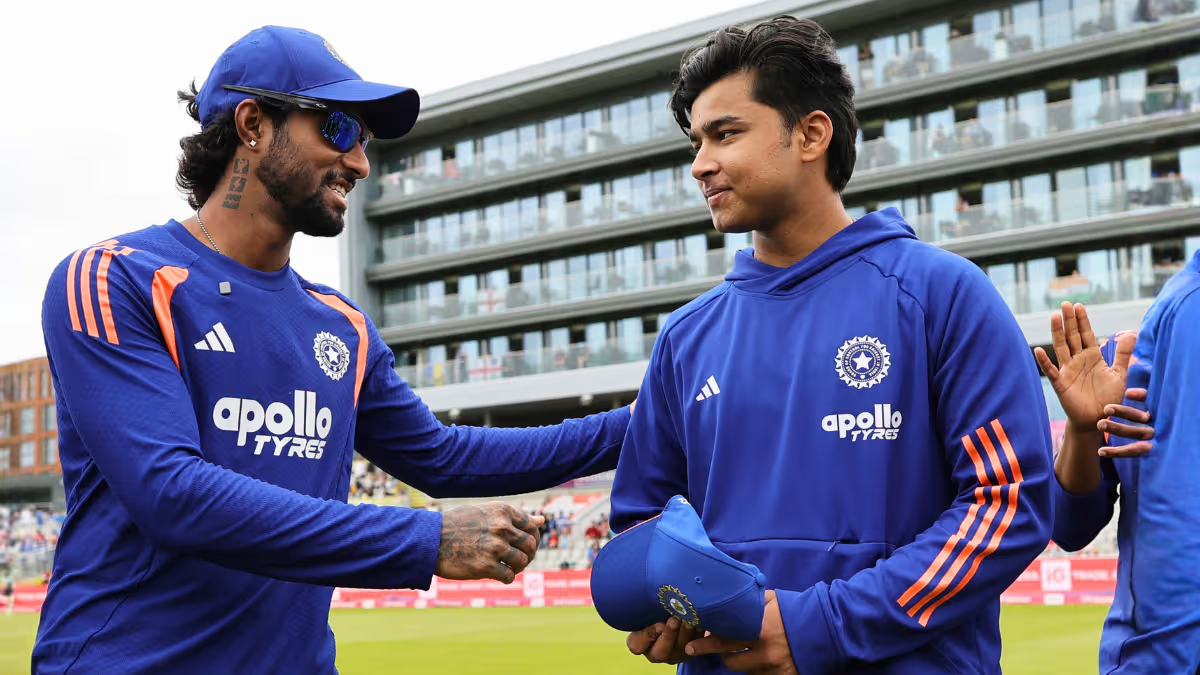
For the last four-and-a-half years, India sat comfortably at the summit of T20I cricket. Bilateral series came and went. ICC trophies were lifted. Opposition teams were beaten so comfortably that defeats came as a huge surprise. But now, nobody knows when India will win in this shortest format of the game. The next tour is of Zimbabwe, and there’s no certainty that the side will cleansweep the Chevrons. This is due to the abject showing we saw in the UK tour.
First, a second-string Ireland side cleaned India up 2-0. Then England followed it with a 4-0 humiliation that exposed every crack hidden beneath the glitter of two successive T20 World Cup triumphs. It was a reality check that has put the BCCI on notice.
India arrived in England as defending world champions. They left as a team stripped of their No.1 ranking, their aura, and perhaps most importantly, the illusion that they had of being unbeatable.
The Samson-Sooryavanshi mess nobody understood
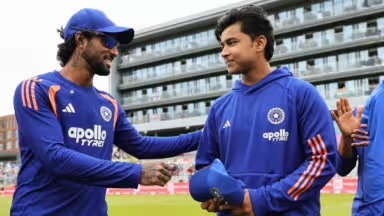
If there was one decision that perfectly summed up India’s confused thinking, it was the handling of Sanju Samson and Vaibhav Sooryavanshi. They had two of the best talents. Of course, both Samson and Sooryavanshi are on the other side of thier careers but the Gautam Gambhir-led management truly fumbled the handling of both of them.
Samson entered the tour with enormous credit in the bank. He was India’s Player of the Tournament during the T20 World Cup and had once again delivered a productive IPL season, this time in his debut season with the Chennai Super Kings (CSK). Yes, he failed against Ireland and then against England in the opening game. But the reaction was extreme. Samson was dropped.
India threw a 15-year-old Sooryavanshi straightaway into the cauldron of a brutal overseas environment. No doubt, he has mastered it all in the IPL, but the pressure is, of course, different at this level. He got found out. Despite some sparks, Jofra Archer had his number and Sooryavanshi failed to repeat any IPL heroics here. Then, after just three matches, they lost patience with him as well.
What exactly was the plan?
If Sooryavanshi was viewed as the future, he needed backing. If Samson was still trusted, he should have been allowed a longer rope. Instead, India ended up hurting both players. Sooryavanshi never got enough time to settle, while Samson was constantly pulled in and out of the XI before being recalled for the final game, where he failed to deliver a big knock.
Moreover, if you benched Samson for three games, why would you bring him for the last game, knowing that he isn’t even in the squad that will go to Zimbabwe? Transition is one thing. Indecision is another..
Tilak Varma, Ishan Kishan and the collapse of India’s batting core
The bigger concern is that India’s senior batting group didn’t perform either. Barring Hardik Pandya and Suryakumar Yadav, this was the same batting unit that played at the World Cup. Ishan Kishan and Tilak Varma were supposed to be the pillars around whom this batting unit was built. Instead, both looked completely out of sync with English conditions.
Kishan & Tilak in the England T20I series
| Player | Scores |
|---|---|
| Ishan Kishan | 0, 49, 13, 4, 56 |
| Tilak Varma | 13, 24*, 3, 11, 53 |
Both scored fifties in the final T20I but it doesn’t tell anything. Kishan’s 49 off 40 balls in Manchester killed India’s momentum. Even in Southampton, his 56 came when England had already posted 257. Tilak’s problems were different. England’s bowlers repeatedly challenged him with bounce and hard lengths, and the vice-captain never looked comfortable.
But the bigger issue was his spin-handling problem. This year, he has struck at a horrible rate of 102.7 against spin. This is just ordinary stuff from a player who is your vice-captain and predominantly bats at number five. Almost 40 per cent of the balls he has faced to spin have ended up being dot deliveries. We have extensively talked about his poor spin-bashing problem throughout the series.
| Inns | Runs | Balls | Outs | Avg | SR | Dot % |
|---|---|---|---|---|---|---|
| 12 | 113 | 110 | 4 | 28.3 | 102.7 | 38.2 |
Washington Sundar: picked without a purpose
India’s management deserves criticism for the way they used Washington Sundar. An all-rounder is selected because he offers flexibility. Yet Sundar looked like a cricketer whose role nobody had properly defined.
Against England in Bristol, he scored 5 off 8 balls and bowled just one over. Mind you, that was the only over he bowled in the entire series (gave 19 runs, in fact). If he’s not trusted to bowl and isn’t being used as a specialist finisher, why is he in the side? Is he a specialist number eight?
In the current regime, all-rounders are being preferred over specialists. But there’s another thing: using the multi-skilled players as well. Captains aren’t trusting them with the ball. While they can’t create impact playing five deliveries as well.
Schoolboy fielding from world champions
The most shocking part of the tour wasn’t the batting or bowling. It was the fielding.
India dropped six catches against Ireland and another five against England. Since the T20 World Cup, their catching efficiency stands at just 72.1%, among the worst figures for any full-member nation.
Harry Tector was dropped repeatedly by India in Ireland. Harry Brook received multiple lives in England. Jos Buttler was put down in Southampton. Being an international cricketer, dropping catches should be criminal. Yet, India kept giving them chances. And England kept making them pay. Shivam Dube, Ishan Kishan, and Suryansh Shedge – all had their horrible moments on the field.
No Bumrah, no party for India’s bowling
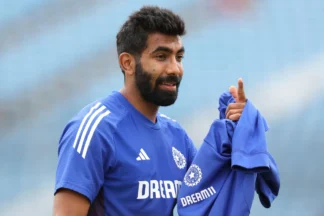
India’s bowling problems became painfully obvious once Jasprit Bumrah wasn’t around. Time and again, Bumrah has covered deficiencies that few people noticed. He bowls the toughest overs, controls everything and provides breakthroughs whenever India need one.
Without him, India’s attack looked ordinary. England targeted everyone. Axar Patel conceded 63 runs in Southampton. Varun Chakravarthy went for 64 in the series. Ravi Bishnoi leaked 60. Prince Yadav conceded 60 as well.
When Buttler and Harry Brook put together their record 233-run partnership, India simply had no answers. More importantly, they had no sixth bowling option either. The management eventually threw the ball to Shivam Dube in desperation, and England happily took 22 runs off his over.
The problem wasn’t one thing. It was everything. The batting looked lost. The bowling ran out of ideas. The fielding was an absolute mess. Selections kept chopping and changing. Nobody seemed sure what their job was. This is still one of the most talented T20 squads on the planet. On paper, India’s depth should scare anyone. But paper doesn’t win you games in England.
England made that hurt.
 Cricket
India squad for Sri Lanka Tests to be picked this week: Bumrah, Jadeja to return, Washington Sundar doubtful
Cricket
India squad for Sri Lanka Tests to be picked this week: Bumrah, Jadeja to return, Washington Sundar doubtful