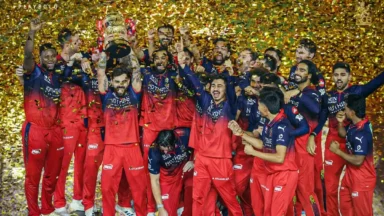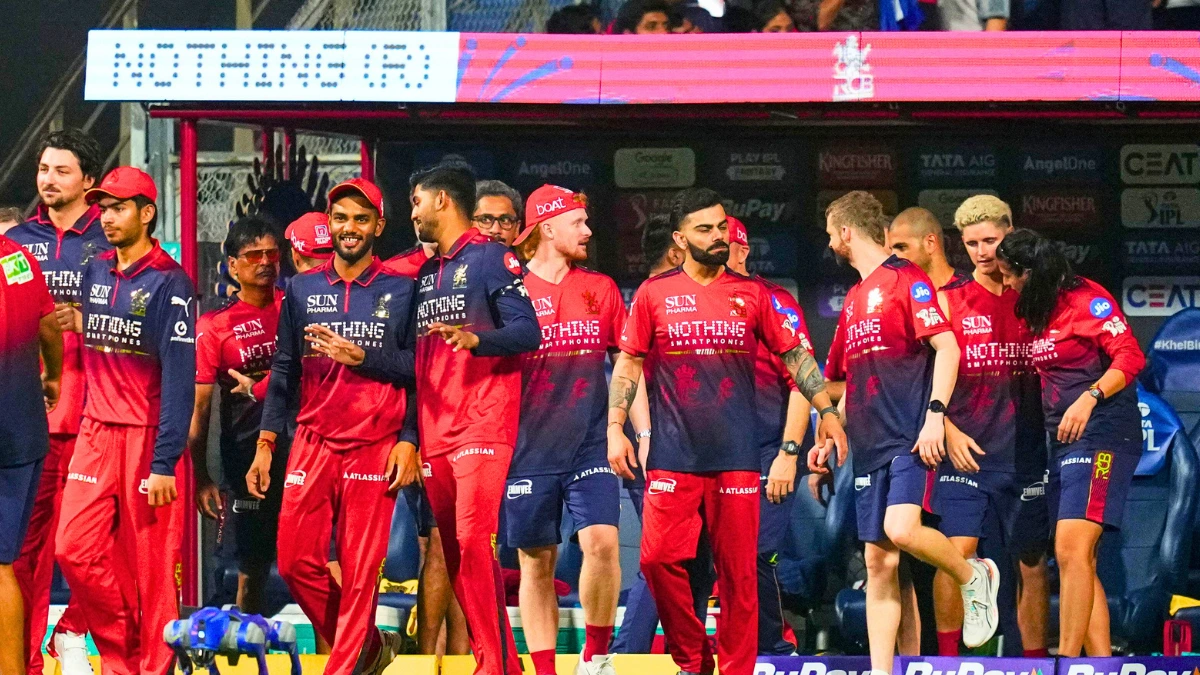
Lucknow Super Giants suffered their third loss of the IPL 2026 season in five games. Royal Challengers Bengaluru pacers demolished out-of-sorts Lucknow Super Giants batters as the visitors failed to capitalise on M Chinnaswamy Stadium’s dimensions in a five-wicket defeat, after setting just a 146-run target. And the game was lost in the powerplay when LSG batters scored just 35/1.
One could blame the pitch as LSG seem to get the worst for the struggling batters. If the Ekana stadium pitch wasn’t enough, M Chinnaswamy Stadium on Wednesday offered a similar surface. The pacers were managing to bowl some skiddy or slower deliveries. In the end, Bengaluru batters applied themselves better to win the game and top the IPL 2026 Points Table after the RCB vs LSG clash.
While from the scorecard, one might think that LSG never had the runs to defend, the match was structurally decided in the powerplay. Lucknow’s powerplay had no power as they managed only 35 runs for one wicket, scoring at 5.83 runs per over with just one four and two sixes. In between, LSG lost Rishabh Pant, who had to retire hurt after getting hit by a Josh Hazlewood delivery. The scoring rate was so below par that it set a structural ceiling on every phase that followed. The Entry Velocity already ruined their game and chance to fight back.
No chance to recover
Their struggles never ended, as the stability window (Overs 7-12) had no stability. After Nicholas Pooran extended his poor run of form and departed in the 7th over, Ayush Badoni (38 off 24) and Mitchell Marsh (40 off 32) seemed to steady the ship with a 36-run stand. But it did not last long. Marsh fell in the 10th over. Abdul Samad (0 off 2) followed suit in the 12th over. That stability window never yielded any result as Lucknow scored 55 runs but also lost three wickets.
LSG’s collapse was compounding phase by phase. In the Acceleration Band (13-16 overs), they lost Ayush Badoni, who had the highest strike rate (158.33) among all LSG batters, in the 16th over.
As a result, Lucknow never had the closure efficiency in the death (16-20 overs). Mukul Choudhary tried his best to salvage something with 39 off 28. But Bhuvneshwar Kumar (3/27) and Rasikh Salam Dar (4/24) dismantled Lucknow’s middle and lower order LSG’s middle and lower order, with five wickets falling for just 28 runs.
Lucknow finished with 146, but it was not the result of a late batting failure. It was the consequence of a powerplay that never gave their middle order a platform to accelerate from.
Rasikh Salam had earlier taken four wickets to dismantle LSG’s middle and lower order, bowling across multiple phases to keep LSG’s total below 150. His figures of 4-0-24-4 were the most economical of the evening and the most structurally decisive. Lucknow Super Giants finished at 36.4 (UNCONTROLLED).
Lucknow Super Giants: Best bowling, worst batting
While one may question the pitches, LSG have played on. Their batters have to share the blame here. After five rounds of matches, Lucknow batters have the worst scoring rate among all 10 teams at 7.96. Even a team like Kolkata Knight Riders, who are yet to win a game, have a better scoring rate of 9.03. LSG are the only team who have a scoring rate below 8 runs per over.
To be fair to LSG’s bowlers, they have been the most economical ones with an 8.75 economy rate on average. But if their batters can’t score runs, their bowlers won’t be able to help much either. That’s exactly what happened with RCB’s chase of 147. LSG bowlers were up against the most destructive batting unit of IPL 2026, RCB. Rajat Patidar’s men have a scoring rate of 11.48 runs per over. Yet, LSG bowlers kept it under 10 (9.82).
Scoring rate in IPL 2026
| Pos | Team | For | Scoring Rate | Against | Conc. Rate |
|---|---|---|---|---|---|
| 1 | RCB | 1043/90.5 | 11.48 | 978/98.0 | 9.98 |
| 2 | PBKS | 598/56.4 | 10.57 | 590/60.0 | 9.83 |
| 4 | RR | 849/81.1 | 10.44 | 871/91.0 | 9.57 |
| 3 | MI | 731/70.1 | 10.42 | 774/69.1 | 11.2 |
| 5 | SRH | 1018/100.0 | 10.18 | 906/94.2 | 9.61 |
| 8 | CSK | 947/100.0 | 9.47 | 937/90.5 | 10.35 |
| 7 | GT | 741/78.4 | 9.45 | 748/79.1 | 9.45 |
| 6 | DC | 707/75.2 | 9.39 | 725/80.0 | 9.06 |
| 10 | KKR | 722/80.0 | 9.03 | 824/79.1 | 10.42 |
| 9 | LSG | 793/99.5 | 7.96 | 796/91.0 | 8.75 |
Virat Kohli’s power in play
Many were criticising Virat Kohli’s strike rate on a batting paradise of Wankhede Stadium. As his fellow RCB batters scored at over 200, Kohli could only strike at 131.58. Back in Chinnaswamy, he turned on the beast mode, coming on as an Impact Sub in the RCB vs LSG game for the first time in his IPL career.
RCB’s response was structured and measured, all thanks to Virat Kohli. His 40 off 20 in the powerplay had seven fours and a six. He never stopped scoring, even as RCB lost Phil Salt in the 2nd over. RCB ended up scoring 60/1 in the powerplay, about 41% runs of the target of 146.
Even though Kohli could only manage 9 off the next 14 deliveries, the Entry velocity (1-6 overs) was so good that other RCB batters had the license to kill. Rajat Patidar’s 27 from 13 and Jitesh Sharma’s 23 from 9 further accelerated RCB’s run-rate.
While Prince Yadav put a break on that rampage with twin strikes in the 13th over, RCB only needed 25 runs more. Tim David and Romario Shepherd completed the formalities in 15.1 overs. Royal Challengers Bengaluru finished with a PCM total of 59.4 (CONTROLLED).
The structural gap of 23.0 points reflects a match decided by LSG’s powerplay failure, as they managed just 35 runs at 5.83 per over. It made their eventual total structurally indefensible.
– Powered by Rajarshi Gupta’s Phase Control Model · pcm.whatthescorecardmissed.com
What is PCM?
The Phase Control Model (PCM) is a structural cricket analytics framework created by Rajarshi Gupta that explains when a match is decided and why, not just who won. PCM divides every T20 innings into four phases:
Each phase is scored and weighted by structural importance, producing a single PCM total per team. The higher the score, the greater the structural control. A team can score more runs than their opponents in a phase and still lose it structurally, if they lost more wickets doing it. PCM explains what the scorecard cannot.
- Entry Velocity (Overs 1-6): The powerplay. Sets the structural platform.
- Stability Window (Overs 7-12): The middle overs. The phase that decides more matches than any other.
- Acceleration Band (Overs 13-16): The highest-weight phase. Where IPL 2026 matches are being decided.
- Closure Efficiency (Overs 17-20): Death overs execution under pressure.
Updated IPL 2026 points table
| Pos | Team | P | W | L | NR | Pts | NRR |
|---|---|---|---|---|---|---|---|
| 1 | RCB | 5 | 4 | 1 | 0 | 8 | 1.503 |
| 2 | RR | 5 | 4 | 1 | 0 | 8 | 0.889 |
| 3 | PBKS | 4 | 3 | 0 | 1 | 7 | 0.720 |
| 4 | SRH | 5 | 2 | 3 | 0 | 4 | 0.576 |
| 5 | DC | 4 | 2 | 2 | 0 | 4 | 0.322 |
| 6 | GT | 4 | 2 | 2 | 0 | 4 | -0.029 |
| 7 | LSG | 5 | 2 | 3 | 0 | 4 | -0.804 |
| 8 | CSK | 5 | 2 | 3 | 0 | 4 | -0.846 |
| 9 | MI | 4 | 1 | 3 | 0 | 2 | -0.772 |
| 10 | KKR | 5 | 0 | 4 | 1 | 1 | -1.383 |
Next IPL 2026 match
| Match | Venue | Time |
|---|---|---|
| Mumbai Indians vs Punjab Kings | Wankhede Stadium, Mumbai | 7:30 PM |
 Cricket
India squad for Sri Lanka Tests to be picked this week: Bumrah, Jadeja to return, Washington Sundar doubtful
Cricket
India squad for Sri Lanka Tests to be picked this week: Bumrah, Jadeja to return, Washington Sundar doubtful