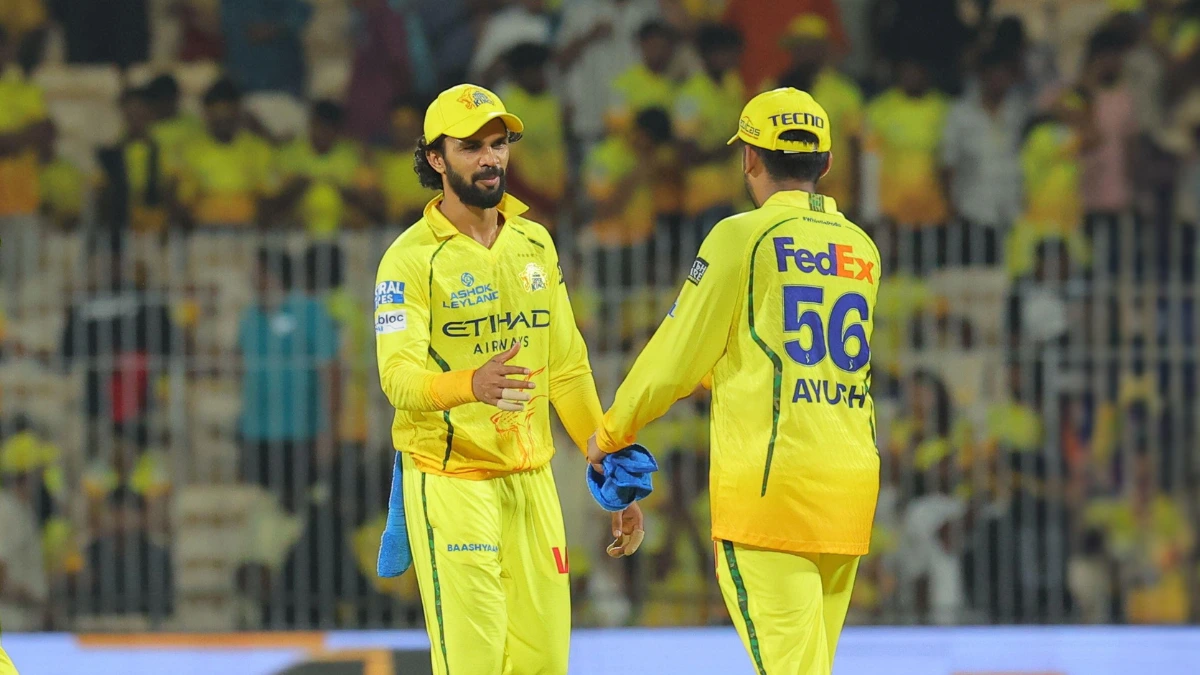
Contrasting powerplays and poor middle-overs, Kolkata’s Knights had a terrible night at Chepauk on Tuesday. They extended their winless run in the IPL 2026 to five games after a 32-run thrashing at the hands of the Chennai Super Kings. In a chase of 193, KKR ended up with 160/7. But was the game lost in the powerplay when KKR could only manage 36/2, while CSK smashed 72/2? In hindsight, that could have been the difference. But it was not.
InsideSport has partnered with Rajarshi Gupta’s Phase Control Model, which tells you what the scorecard missed.
What is PCM?
The Phase Control Model (PCM) is a structural cricket analytics framework created by Rajarshi Gupta that explains when a match is decided and why, not just who won. PCM divides every T20 innings into four phases:
Each phase is scored and weighted by structural importance, producing a single PCM total per team. The higher the score, the greater the structural control. A team can score more runs than their opponents in a phase and still lose it structurally, if they lost more wickets doing it. PCM explains what the scorecard cannot.
- Entry Velocity (Overs 1-6): The powerplay. Sets the structural platform.
- Stability Window (Overs 7-12): The middle overs. The phase that decides more matches than any other.
- Acceleration Band (Overs 13-16): The highest-weight phase. Where IPL 2026 matches are being decided.
- Closure Efficiency (Overs 17-20): Death overs execution under pressure.
Where did KKR lose?
The Entry Velocity was already poor as Kolkata Knight Riders scored 36/2 in a chase of 193. But there was hope. KKR still had two in-form batters in Ajinkya Rahane and Angkrish Raghuvanshi on the crease, with Cameron Green, Rinku Singh, Rovman Powell, and Ramandeep Singh to come.
But the match was structurally settled not in the final over but in two consecutive balls in the 11th. In hindsight, Noor Ahmad turned the match in CSK’s favour completely. Ajinkya Rahane fell for 28 off 22 at 10.5 to Noor Ahmad. Cameron Green extended his poor run of form as he fell on the next delivery (10.6) to the same bowler.
KKR went from 85/3 to 85/5 in a single over, with the required rate climbing steeply. Before that, Raghuvanshi perished in the 10th over to Akeal Hosein after surviving two dropped catches. Those 3 wickets KKR lost across the middle overs, the Stability Window (overs 7 to 12), left Powell and Ramandeep batting at seven and eight with an uphill task, and the defeat for the Knight Riders was inevitable.
As scoring got difficult in the Acceleration Band (Overs 13-16), Powell and Ramandeep did try their best in the final overs to have Closure Efficiency (Overs 17-20). But it was already too late.
Where did CSK triumph?
Unlike Kolkata, Chennai Super Kings had a contrasting middle overs. They had done the opposite. Sanju Samson and Ayush Mhatre built a platform in the Entry Velocity (the powerplay). Mhatre’s 17-ball 38 took CSK to 72/2.
The run rate dipped as the ball got older. But Dewald Brevis (41 ff 29) and Samson (48 off 32) built a platform that produced 46 runs and only one wicket in the same phase (Stability Window), before the Acceleration Band delivered 44 runs from four overs without losing a wicket.
That sequence, one wicket in the middle eight overs of CSK’s innings, is what made 192 a total KKR could not structurally chase. Narine’s 4-0-21-1 and Kartik Tyagi’s 4-0-35-2 were KKR’s best returns with the ball. But CSK’s structural accumulation across the middle phases was already too advanced to contain.
Chennai Super Kings finished with a PCM total of 65.5 (DOMINANT). Kolkata Knight Riders finished at 37.0 (UNCONTROLLED). The structural gap of 28.5 points reflects a match in which CSK controlled every phase that mattered while KKR lost three wickets in their middle overs and never recovered the structural position to threaten 193.
 Cricket
India squad for Sri Lanka Tests to be picked this week: Bumrah, Jadeja to return, Washington Sundar doubtful
Cricket
India squad for Sri Lanka Tests to be picked this week: Bumrah, Jadeja to return, Washington Sundar doubtful