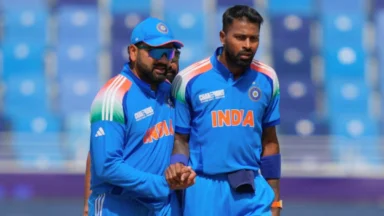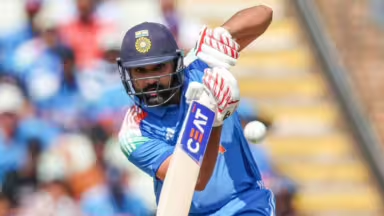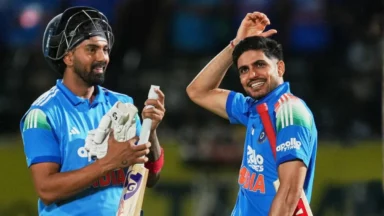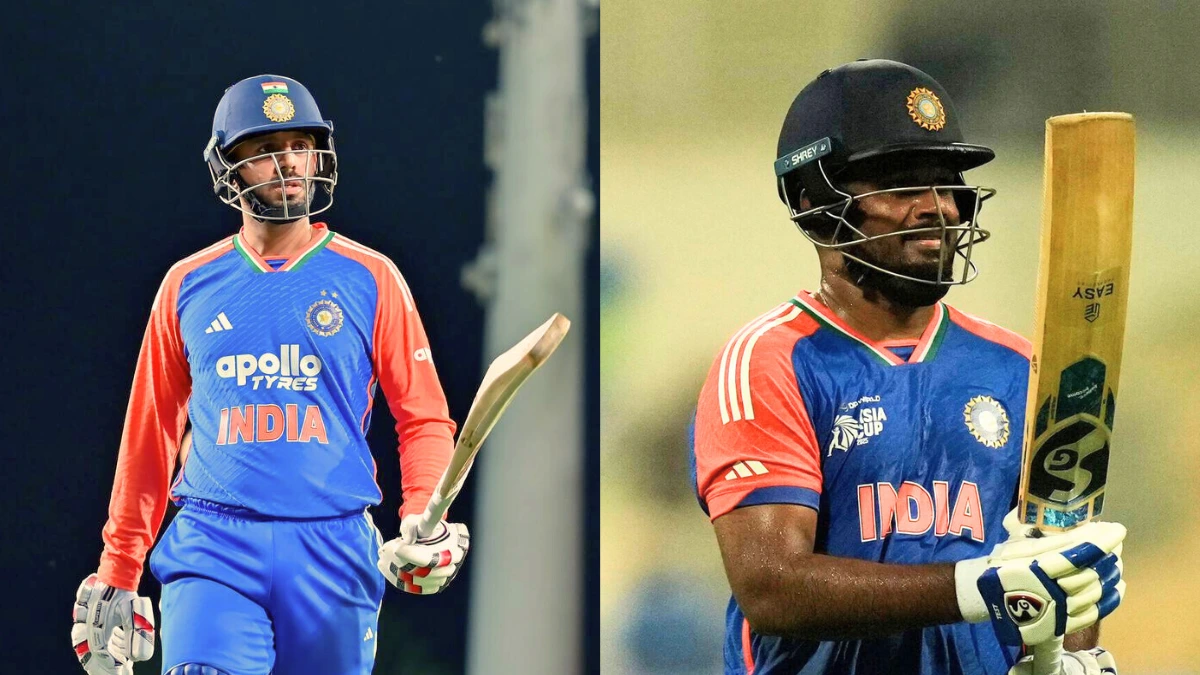
Leading into the T20 World Cup 2026, India don’t have a settled batting unit. India’s choice of wicketkeeper for the South Africa T20I series was always going to attract attention. With Rinku Singh left out and the management leaning heavily toward a dedicated finisher, Jitesh Sharma was preferred over Sanju Samson for the opener in Cuttack.
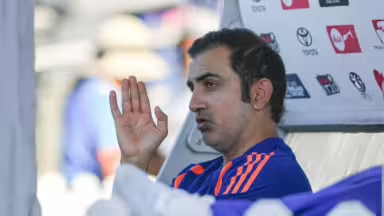
It was a continuation of India’s recent selection pattern. Gautam Gambhir likes a middle order packed with all-rounders, leaving only one pure finisher slot to fill. And Jitesh, far more suited to that role than Samson, was backed again. After India’s dominant 101-run win, the Vidarbha wicketkeeper-batter addressed the subject everyone wanted clarity on. Questions were asked on how this constant comparison with Samson affects their equation.
Samson elder brother, not rival: Jitesh Sharma
While speaking at the post-match press conference, it was heartening to listen to Jitesh, who spoke like someone who understands that competition and camaraderie can coexist. In a format where mostly just one specialist wicket-keeper is needed, the glovesmen are accustomed to waiting for their chances. Jitesh waited for his when Samson was a regular in the team. Now, it is vice versa.
“Frankly speaking, he is like an elder brother,” he said, before saying that competition between them is not a friction point but a catalyst. “With healthy competition, your talent comes out. It is good for the team also. There is so much talent. You can feel it.”
“Sanju bhaiya is a great player. I have to compete with him, that is when I have to be at my best. We are both trying to play for India. We are like brothers. We share a lot of experience with each other. He helps me a lot. If I have to compete with him, I have to play shoulder to shoulder, then I have to bring my A game.”
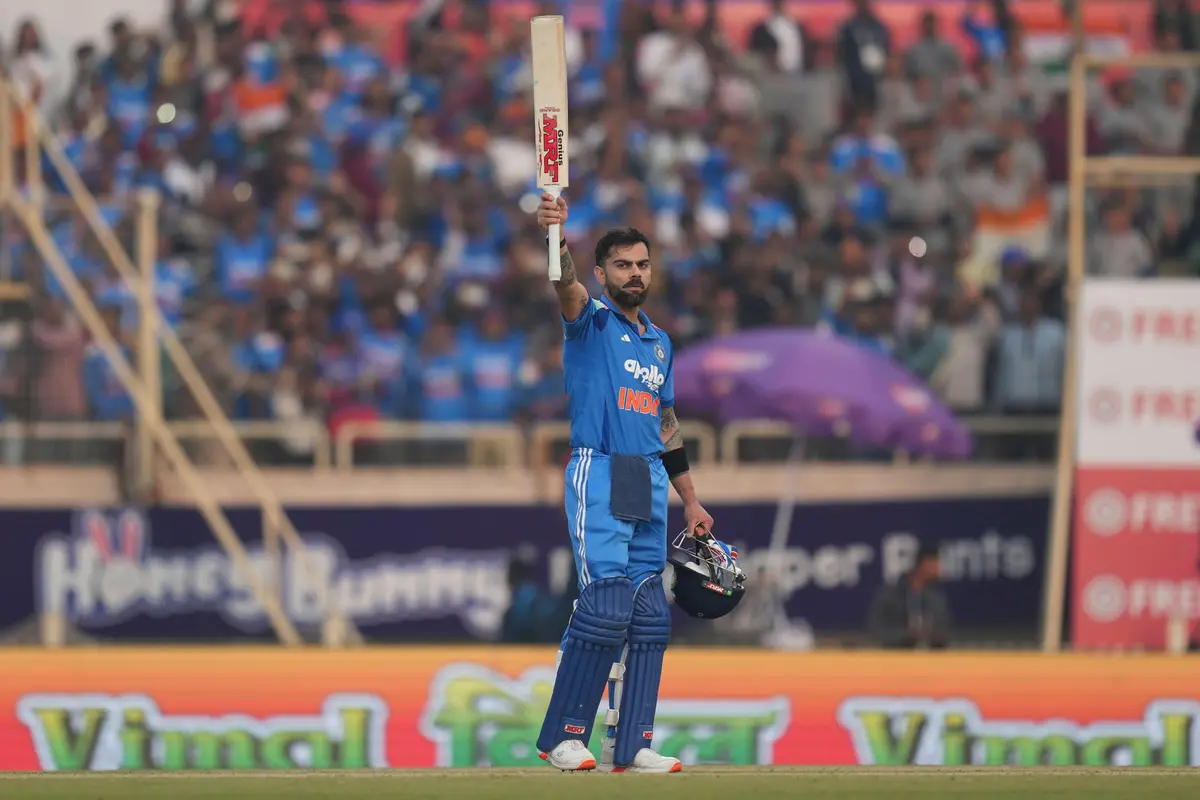
Why Jitesh over Samson?
Beyond the personal equation, the bigger cricketing problem is India’s continuous indecision. Under Gautam Gambhir, the middle order has looked like a rotating queue. While it wasn’t the case in Cuttack, but across all the T20Is in 2025, players like Axar Patel, Shivam Dube, and even Harshit Rana have been shuffled around. Suryakumar Yadav’s massive dip in form hasn’t helped. Tilak Varma didn’t fire against Australia either.
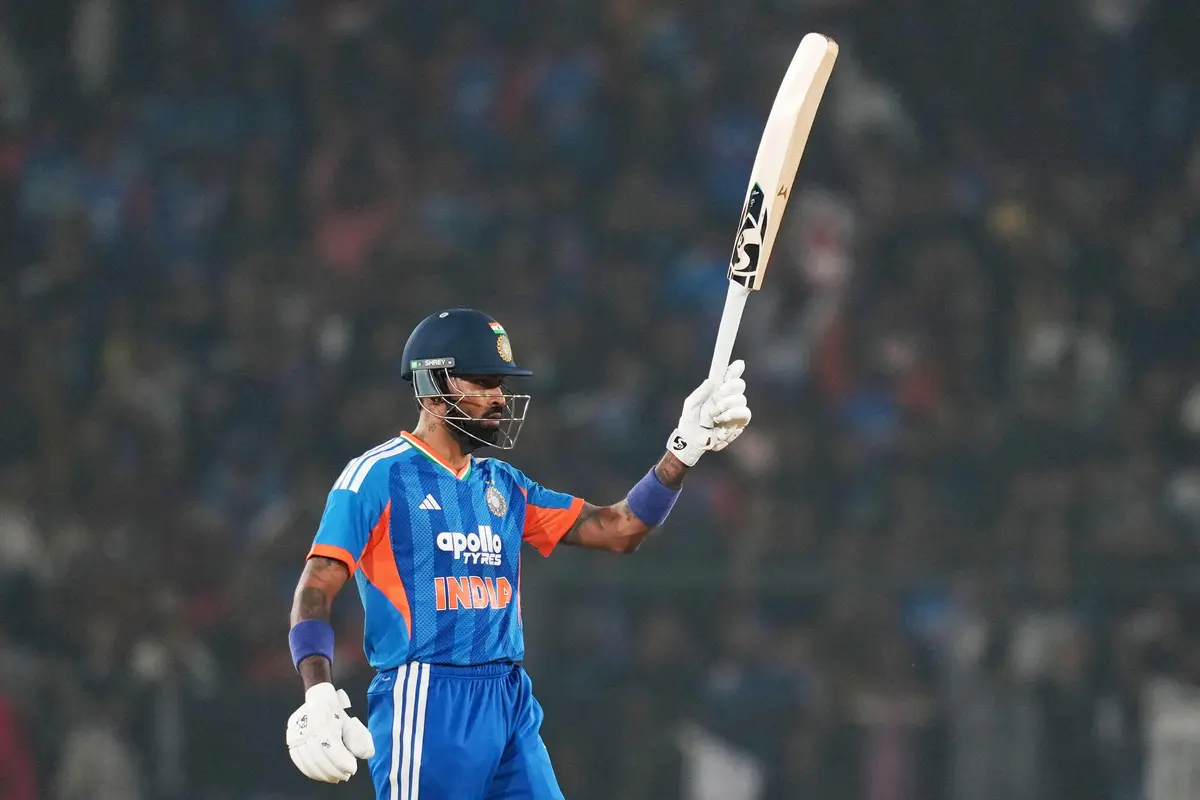
A high-quality batter should ideally adapt, but some roles are too specialised to dilute. And this is where Jitesh stands out. He is not a No. 3 or No. 4 wannabe. He is a pure finisher, which is a dying breed in India’s ecosystem. His cameo in Hobart against Australia (22 off 13 at No. 7) was a reminder of what he is built to do. Even in Cuttack, he made 10* off five balls on a surface where only one (Hardik Pandya) out of 22 players shone with the bat. Jitesh also took four catches, nearly joining MS Dhoni as the only Indian keeper with five dismissals in a T20I.
| Season | Innings | Runs | HS | Avg | SR |
|---|---|---|---|---|---|
| IPL Career | 47 | 991 | 85* | 25.41 | 157.05 |
| IPL 2025 (RCB) | 11 | 261 | 85* | 37.28 | 176.35 |
The final nine matches before the World Cup might be Samson’s last chance to prove he can adapt. But at this point, Jitesh seems the safer and more sensible option. If playing, Samson should not come below number four. India don’t need another floating batter; they need a role player who fits a system. And right now, that player looks a lot more like Jitesh Sharma than Sanju Samson.
 Cricket
India squad for Sri Lanka Tests to be picked this week: Bumrah, Jadeja to return, Washington Sundar doubtful
Cricket
India squad for Sri Lanka Tests to be picked this week: Bumrah, Jadeja to return, Washington Sundar doubtful