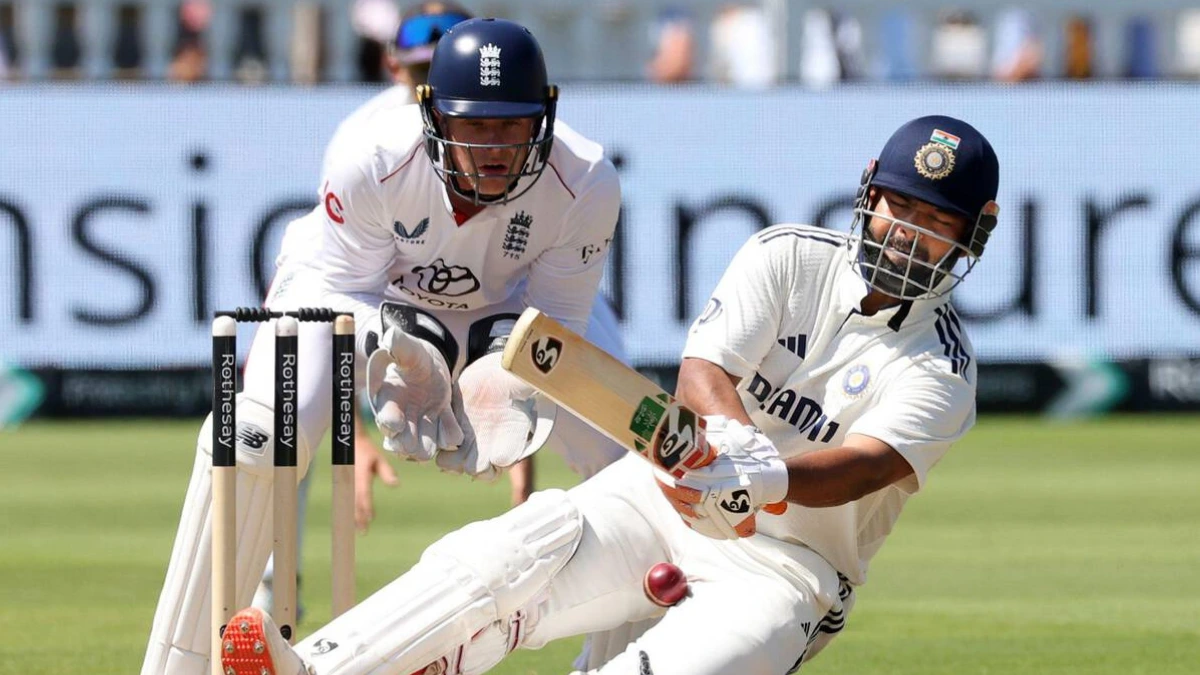
Two former England captains, Alastair Cook and Michael Vaughan, have recently put forward fresh ideas to the International Cricket Council (ICC) aimed at improving Test cricket and addressing some of its shortcomings. Their suggestions come during the time when the demand for Test cricket is only majorly among the ‘Big 3’. The shortest formats have grappled with the larger scene in cricket. However, the five-day red-ball game still remains the pinnacle.
Sir Alastair Cook comes up with unique idea
Sir Alastair Cook, one of England’s highest run-scorers in Test history, focused on how the current new-ball rule limits strategic options for captains.
At present, teams can only take a new ball after 80 overs, but Cook believes this restricts teams to think out of the box. He proposed a more dynamic approach, saying, “A new rule I would add would be, how about, in 160 overs, you can take the new ball whenever you want? You have got two new balls for those 160 overs, and you can take that second ball whenever you want. You could take one after 30 overs if you wanted to.”
This idea aims to allow bowlers to exploit favorable conditions more effectively and inject added excitement into the ebb and flow of Test matches. After all, nobody likes a run-fest in red-ball cricket where bowlers have nowhere to go.
Why no substitutes in Tests?
Meanwhile, Michael Vaughan once again highlighted a different concern around player injuries and match quality. Reflecting on recent scenarios, like India’s Rishabh Pant carrying a fractured hand while Dhruv Jurel kept wickets, Vaughan questioned why substitutions remain so narrowly defined in cricket.
He explained, “We have concussion subs. So why don’t we have substitutes? All of the other sports have it—why are we allowing the game to be reduced in quality if someone gets a clip?” “In the first innings of a game, let’s say Rishabh Pant takes a knock to his hand. He can still bat but can’t keep wickets. Under current rules, India can’t bring on another keeper like Dhruv Jurel unless it’s a concussion case,” Vaughan said.
His point is simple: why limit substitutions to head injuries when other equally serious external injuries can take a player out of the game completely? Pant’s injury was a sudden, external impact that left him physically unable to continue. Yet, under current rules, India can’t bring in a replacement. In a five-day contest, such situations tilt the game heavily in favour of the opposition.
Moreover, Pant’s injury occurred on the first day itself. It meant India were without their vice-captain for the rest of the game. It is unfair. What if another player gets hit and can’t continue to participate?
 Cricket
Ayush Mhatre or Ruturaj Gaikwad: Who should open with Sanju Samson for CSK in IPL 2026?
Cricket
Ayush Mhatre or Ruturaj Gaikwad: Who should open with Sanju Samson for CSK in IPL 2026?

 KKR's bowling woes could be boon for Umran Malik, India comeback on platter barring further injuries
 DRS March 25: New owners for RR & RCB, no Yash Dayal in IPL 2026, Rinku Singh named KKR vice-captain