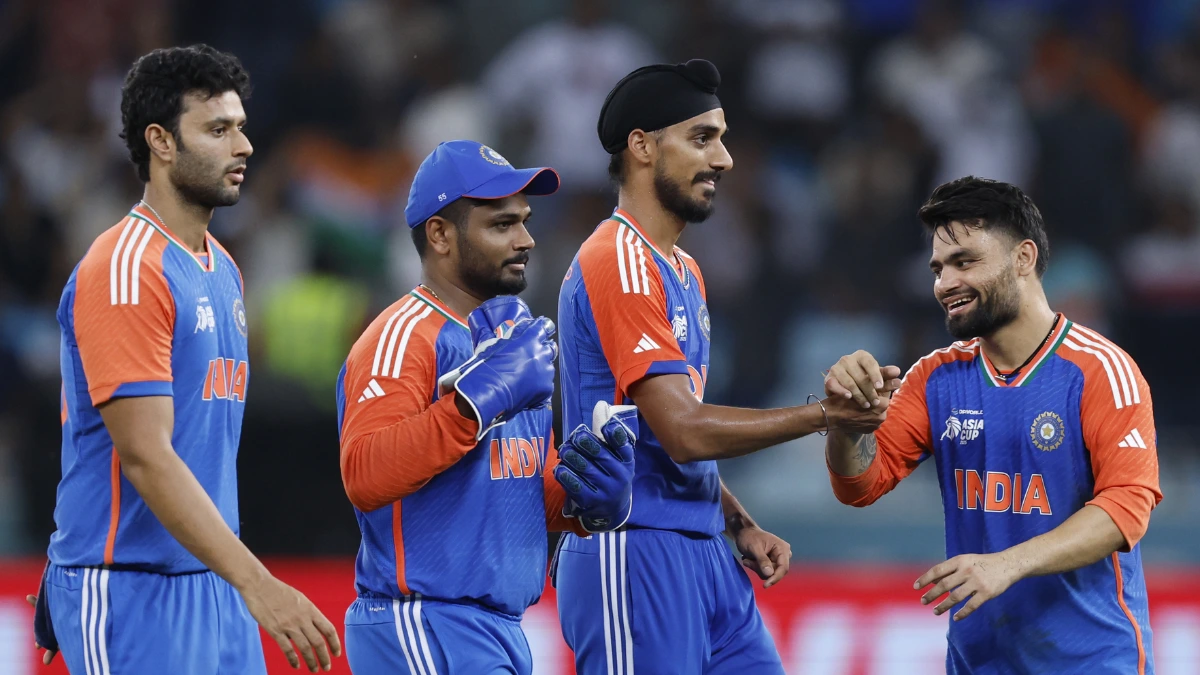
For the first time in Asia Cup history, two arch-nemesis, India and Pakistan, will go head-to-head in the summit clash. It is a broadcaster’s dream to have as many as three India-Pakistan games within a span of three weeks. For all the boycott threats and politically charged messages, a final of this high drama is exactly what many wanted.
India enter the final unbeaten. However, they have had their period of lull. The batting, particularly the lower and middle order, hasn’t clicked, as there has been an overreliance on Abhishek Sharma, the superstar of the tournament. Jasprit Bumrah is yet to hit his straps, while death bowling has also been an issue. Pakistan, meanwhile, stuttered but has found a rhythm in the last couple of games. Shaheen Afridi is back to his best, and they have also found a much better combination. Aside from all the off-field drama, the 40 overs will decide which nation will feel humiliation and which country will bask in jubilation.
Why Arshdeep Singh over Shivam Dube?
India’s batting depth has often come at the cost of balance, and that is why Shivam Dube has kept his place so far. But in a final against Pakistan, runs at No. 8 matter less than control with the ball at the death. Arshdeep Singh offers exactly that.
His comeback against Sri Lanka was a masterclass in death bowling, something that India is lacking. After being expensive early, he returned to nail yorkers and wide lines under pressure, strangling the chase in the final overs. For a side that has leaked more than 11 an over in the last five overs in this Asia Cup, his value is obvious.
Pairing him with Jasprit Bumrah would give India two proven end-overs specialists, freeing Hardik Pandya for the middle phase. India’s spin core of Kuldeep Yadav, Varun Chakaravarthy and Axar Patel already gives plenty of bowling options, meaning the extra cushion with Dube isn’t a necessity. Against the Pakistani side, who batted well in the last bout, India would be better served with a bowler who can hold his nerve rather than a floater whose batting has barely been used.
Predicted India Playing XI vs Pakistan
| S. No. | Player | Role |
|---|---|---|
| 1 | Shubman Gill (VC) | Batter |
| 2 | Abhishek Sharma | Batter |
| 3 | Suryakumar Yadav (C) | Batter |
| 4 | Tilak Varma | Batter |
| 5 | Sanju Samson (wk) | Keeper |
| 6 | Hardik Pandya | Pace all-rounder |
| 7 | Axar Patel | Spin all-rounder |
| 8 | Kuldeep Yadav | Spinner |
| 9 | Varun Chakaravarthy | Spinner |
| 10 | Jasprit Bumrah | Pacer |
| 11 | Arshdeep Singh | Pacer |
Suryakumar’s form a bigger worry
If India have a weak link heading into the final, it is their captain. Suryakumar Yadav, usually the most destructive T20 batter in the world, has looked a shadow of himself in internationals. Just 99 runs in 10 innings this year, three ducks, and a strike rate of 110 paint a bleak picture.
Since the T20 World Cup win in 2024, his numbers include only 329 runs in 19 innings with only two fifties. It is certainly a huge slump. On the contrary, he is same player who was the Player of the Tournament at the IPL 2025, smashing 25+ scores for 16 consecutive times. His struggles have increased India’s reliance on Abhishek Sharma, who has carried the top order, and on the spin duo of Kuldeep and Varun, who have consistently delivered control in the middle overs. Against Pakistan, Suryakumar has a poor average of 18.5 as well. That has to change if India want to beat Pakistan ruthlessly again.
 Cricket
Ayush Mhatre or Ruturaj Gaikwad: Who should open with Sanju Samson for CSK in IPL 2026?
Cricket
Ayush Mhatre or Ruturaj Gaikwad: Who should open with Sanju Samson for CSK in IPL 2026?

 KKR's bowling woes could be boon for Umran Malik, India comeback on platter barring further injuries
 DRS March 25: New owners for RR & RCB, no Yash Dayal in IPL 2026, Rinku Singh named KKR vice-captain