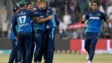
The international Cricket Council (ICC) has managed to get Bangladesh Cricket Board (BCB) to reconsider their plea to relocate their T20 World Cup 2026 games from India to Sri Lanka. This comes after the BCB wrote to the global body seeking relocation of matches citing security concerns for their players amid soaring tensions between India. As per reports, the ICC has attempted to mediate between the BCCI and the BCB in an attempt to diffuse the tension between the two boards.
Will Bangladesh do U-turn on their T20 World Cup plea?
As per The Telegraph, the BCB has sought time from the ICC to revert on their plea but have made it clear that it will only get back after consultation with the country’s government. The report claims that ICC held several rounds of meeting between officials of the BCCI and the BCB on Monday. The ICC is reportedly willing to make minor changes to Bangladesh’s schedule for the T20 World Cup and has promised top-security for their players in India.
“ICC will try to coax and convince Bangladesh to play in India. It’s not just about the two teams, it also involves the spectators and fans, broadcasters, travelling media…” a veteran administrator associated with the ICC said.
Bangladesh are scheduled to play three T20 WC 2026 matches in Kolkata and one game in Mumbai. The BCB’s plea to relocate their games to Sri Lanka will be a logistical nightmare for the organizers and the broadcaster, as pointed out by a BCCI source earlier.
The report states that while the ICC is ready to keep a Plan B in place, the global body might want the BCCI and the BCB to sort out the issue between themselves. The report also claims that Bangladesh wouldn’t want to lock horns with the all-powerful BCCI, owing to it’s financial clout and the risk of sinking into losses going forward.
“All boards realise that only matches against India will fill their coffers. So it’s best to maintain a healthy relationship with the BCCI,” said a source.
 Cricket
Shreyas Iyer breathing down Suryakumar Yadav's neck for India's No. 4 spot with another IPL masterclass
Cricket
Shreyas Iyer breathing down Suryakumar Yadav's neck for India's No. 4 spot with another IPL masterclass