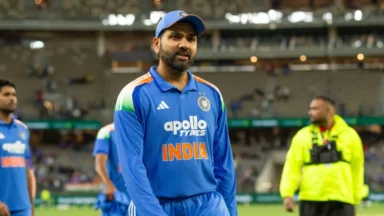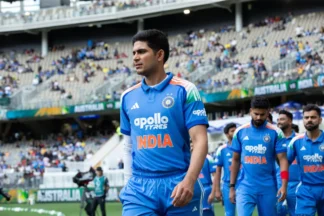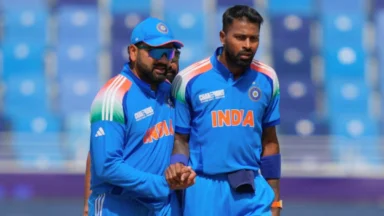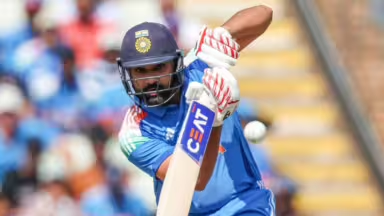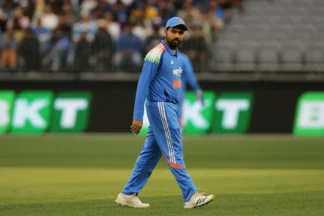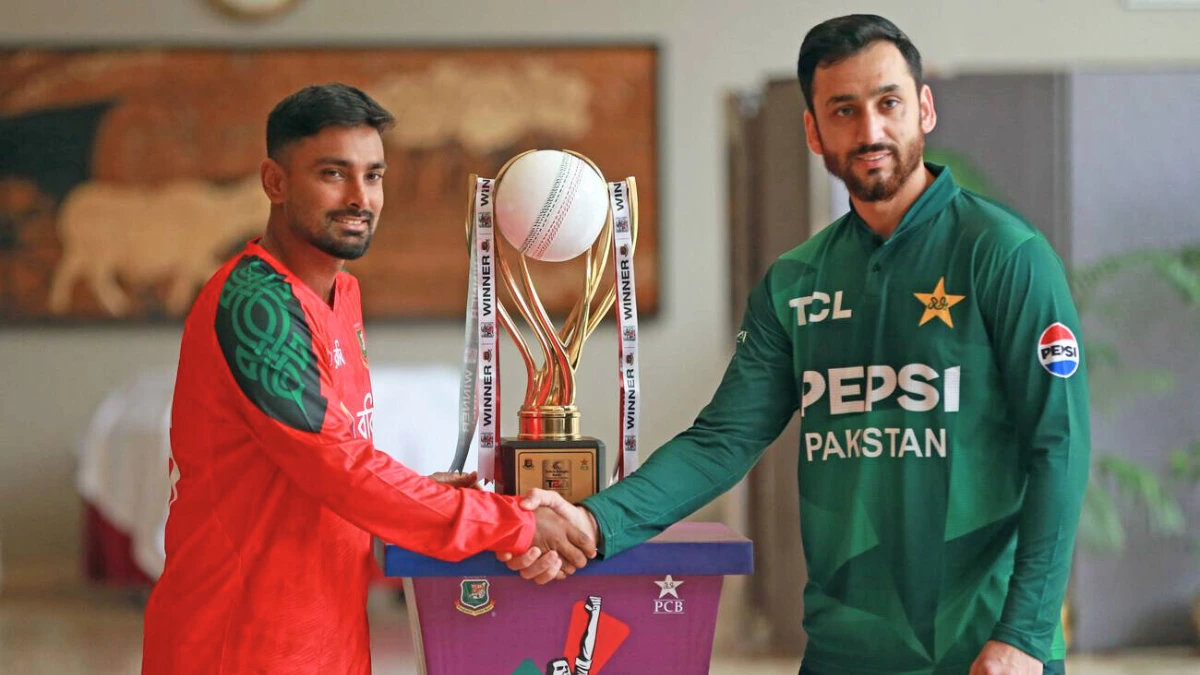
Notwithstanding the sanctions the International Cricket Council (ICC) will put against them, the Pakistan Cricket Board (PCB) has decided to boycott the highly anticipated India vs Pakistan game at the ICC Men’s T20 World Cup 2026. Pakistan were always against the ICC’s stance of not allowing Bangladesh to play cricket outside India. After the ICC replaced Bangladesh with Scotland, the PCB chief Mohsin Naqvi stated that Pakistan’s stance will be taken after consideration with the local government.
On Sunday, the Pakistan Government took to social media to announce that the Men in Green will turn up for the event but will forfeit their points against India. While this is something that isn’t new or unprecedented. However, this isn’t a normal game. It is the biggest cash cow for all the parties involved. The biggest cricket game.
Over the years, World Cups have occasionally been shaped by teams refusing to play specific fixtures, largely due to security concerns or political pressure. In this article, we take a look at all those incidents when a team has decided to forfeit their points by boycotting a World Cup game.
1996 ODI World Cup: Australia & West Indies refuse to tour Sri Lanka
In early 1996, Sri Lanka was hosting a World Cup amid an active civil war. Two weeks before the tournament, a bomb ripped through Colombo’s Central Bank, killing 91 people, injuring 1,400 people and shaking confidence across visiting teams. Australia and the West Indies, both scheduled to play Sri Lanka in Colombo, chose not to travel. The decision wasn’t political; it was purely about safety. Both teams stayed back in Mumbai while their fixtures were due.
Sri Lanka were awarded walkovers for both matches. All three teams still qualified for the next round. Sri Lanka, with momentum and points in hand, went on to win the World Cup.
2003 ODI World Cup: England boycott Zimbabwe match
England’s refusal to play Zimbabwe in Harare during the 2003 World Cup was openly political. The UK government’s opposition to Robert Mugabe’s regime, combined with reported death threats, made the situation untenable for the team. The UK government was against Zimbabwe due to human rights abuses and the violent seizure of white-owned farms. While the government didn’t ban England from travelling, they put moral and political pressure on the ECB.
Eventually, Nasser Hussain’s side opted not to travel, forfeiting the match and gifting Zimbabwe two points. The decision came at a heavy cost. England failed to qualify for the Super Six stage, finishing behind Zimbabwe by exactly those two points.
2003 ODI World Cup: New Zealand didn’t travel to Kenya
The same tournament produced another walkover. New Zealand refused to travel to Nairobi to play Kenya after receiving intelligence warnings about terrorist activity in the region.
Kenya were awarded the points and rode that momentum into one of the most remarkable runs in World Cup history, eventually reaching the semifinals. They became the first and the only non-Test-playing side to feature in an ODI World Cup semi-final. New Zealand qualified despite the loss before missing out in the semis after losses against Australia and India.
Other World Cup withdrawals worth noting
Beyond senior men’s World Cups, similar decisions have cropped up elsewhere. Zimbabwe pulled out of the 2009 T20 World Cup in England amid visa uncertainty. Australia withdrew from the 2016 Under-19 World Cup in Bangladesh, citing security risks. New Zealand opted out of the 2022 Under-19 World Cup in the Caribbean due to COVID-19 isolation rules.
 Cricket
India squad for Sri Lanka Tests to be picked this week: Bumrah, Jadeja to return, Washington Sundar doubtful
Cricket
India squad for Sri Lanka Tests to be picked this week: Bumrah, Jadeja to return, Washington Sundar doubtful